BEAT THE HEAT: Cat Safety Guide

Cat Safety Guide
Keeping Your Cat Safe in Hot Weather
Cats are often good at finding shade, resting during the warmest parts of the day and choosing cooler spots around the home. But that does not mean they are safe from hot weather. Heat-related illness can affect cats too - and because cats often hide signs of illness or discomfort, it can be harder to spot when they are struggling.
As UK summers become warmer, cat owners should take extra care during hot weather, especially for older cats, kittens, long-haired cats, overweight cats, flat-faced breeds such as Persians, and cats with existing health conditions.
Heat-related illness can affect cats too
There is a common misconception that heat-related illness only affects dogs left in hot cars. In reality, heat-related illness can affect a wider range of companion animals - including cats.
Research using data from the UK’s Small Animal Veterinary Surveillance Network - SAVSNET - published in the Open Veterinary Journal, looked at heat-related illness cases presented to participating veterinary practices between 2013 and 2018. Of 174 heat-related illness cases recorded across companion animals, dogs accounted for most cases, but cats made up 9.2% of cases.
For cats, June and July were the months when most cases were seen. Older cats - particularly those aged 15 years or over - appeared to be more susceptible. The reported trigger for feline patients was hot weather, meaning the risk is not only about cars or outdoor activity. Hot, poorly ventilated indoor spaces such as conservatories, greenhouses, sheds, garages or rooms with strong direct sun can also become dangerous.
This is why cat owners should take hot weather seriously, especially if their cat is older, overweight, long-haired, flat-faced, very young or living with an existing health condition.
Source:
Hall, E., Radford, A. and Carter, A. “Surveillance of heat-related illness in small animals presenting to veterinary practices in the UK between 2013–2018.” Open Veterinary Journal, 2022. DOI: 10.5455/ovj.2022.v12.i1.2. SAVSNET / University of Liverpool.
There is a common misconception that heat-related illness only affects dogs left in hot cars. In reality, heat-related illness can affect a wider range of companion animals — including cats.
Understanding the canine risk
Cats can be independent and adaptable, but hot weather can still put them at risk. The danger often comes from a combination of heat, poor ventilation, dehydration and limited access to cooler areas.
One of the biggest risks for cats is becoming trapped in hot, poorly ventilated spaces. Conservatories, greenhouses, sheds, garages, cars and rooms with large windows can heat up quickly, especially in direct sun. Always check these spaces before closing doors, windows or gates.
Indoor cats can also be at risk if they are shut in warm rooms without access to shade, fresh water or cooler parts of the home. Outdoor cats may seek shade, but they can still become dehydrated or accidentally trapped in sheds, garages or outbuildings.
Some cats are more vulnerable in hot weather, including:
- very young kittens,
- older cats,
- overweight cats,
- long-haired cats,
- flat-faced breeds, such as Persians,
- cats with heart, lung, kidney or mobility problems,
- cats recovering from illness or surgery.
Heat risk is not only about the number on the thermometer. Humidity, direct sun, poor ventilation, stress, dehydration, age, coat type, breed and health conditions all matter.
Practical tips for keeping your cat cool
|
|
Provide several water stationsPlace fresh water in more than one quiet location around the home. Some cats prefer moving water, so a pet fountain may encourage them to drink, but multiple clean bowls can be just as helpful. Make sure outdoor cats also have access to water outside, especially if they spend time in the garden. |
|
|
Create cool, quiet resting placesGive your cat access to cooler rooms, shaded areas, tiled floors or other cool surfaces. Bathrooms, utility rooms and hallways often stay cooler than rooms with large windows. You can place a wrapped frozen water bottle near your cat’s resting area, but do not put it directly against them and never force them to stay near it. Cats should always be able to move away if they want to. Cooling mats or damp towels may help some cats, but others may avoid them. Let your cat choose what feels comfortable. |
|
|
Keep hot rooms under controlClose curtains or blinds in rooms that get strong direct sun, especially during the hottest part of the day. This can help reduce the greenhouse effect in rooms with large windows. Be especially careful with: conservatories, |
|
|
Keep air moving safelyFans can help air circulate, but they do not lower the room temperature in the same way as air conditioning. Make sure your cat can choose whether to sit near the airflow or move away from it. Do not point a strong fan directly at your cat for long periods. The aim is to improve air movement in the room, not to force airflow onto them. |
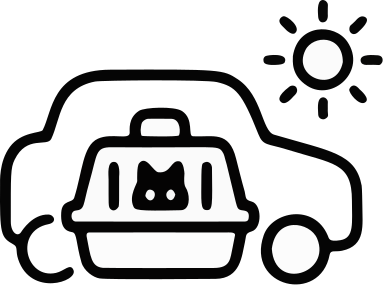 |
Avoid unnecessary travel in hot weatherTravelling can be stressful for cats, and cars can become dangerously hot very quickly. Avoid non-essential car journeys during hot weather. If travel is unavoidable, keep the carrier shaded and well ventilated, keep the journey as short as possible, and never leave your cat unattended in a car. |
|
|
Check hiding places before closing doorsCats are curious and may slip into sheds, garages, greenhouses, conservatories or cars without being noticed. These spaces can become dangerously hot. Before closing up, always check that your cat — and any neighbourhood cats — are not inside. |



Temperature risk guide for cats
Temperature can help owners think about risk, but it should never be used on its own.
| Temp | Risk level | Guidance |
|---|---|---|
| 30°C+ | Extreme caution | Keep your cat indoors, cool and calm. Watch closely for signs of heatstroke. |
| 25–29°C | High risk for vulnerable cats | Older, overweight, long-haired, flat-faced or unwell cats may struggle quickly. |
| 20–24°C | Use caution | Provide shade, fresh water, airflow and access to cooler rooms. |
| Below 20°C | Lower heat risk | Usually lower risk, but sun, humidity, poor ventilation and health still matter |
Important: Temperature is only a guide. Humidity, direct sun, poor ventilation, stress, dehydration and your cat’s health all affect risk.
Warning signs of heat-related illness in cats
Cats often hide signs of illness, so take changes in behaviour seriously. Contact your vet immediately if you notice:
- panting, fast breathing or difficulty breathing,
- excessive drooling,
- bright red, dark red, pale or blue-tinged gums,
- unusual lethargy or weakness,
- confusion or distress,
- vomiting or diarrhoea,
- wobbliness, staggering or collapse,
- seizures,
- unconsciousness.
Panting is unusual in cats and should be treated as a serious warning sign, especially in hot weather.
What to do if you suspect heatstroke
If you think your cat may be suffering from heatstroke, act quickly.
- Move your cat to a cooler place immediately.
- Start cooling them with cool water.
- Focus on the body, paws and ears.
- Offer water, but do not force your cat to drink.
- Contact your vet immediately.
Do not use ice-cold water and do not delay veterinary advice. Heatstroke can cause dehydration, organ damage and death, so fast action matters.
Key message
Hot weather can affect cats as well as dogs. The safest approach is to prevent overheating before it starts: provide water, shade, airflow and cooler spaces, and never leave cats trapped in hot, poorly ventilated areas.
If your cat is older, overweight, long-haired, flat-faced or unwell, be especially cautious during June, July and other periods of hot weather.
If you were inspired by this article and you would like to help animals in the area with us, join us, or if you do not feel that it is for you but you have a friend who cares about animal welfare - let them know. We are looking for volunteers.
There are so many things to do. ❤🐾